

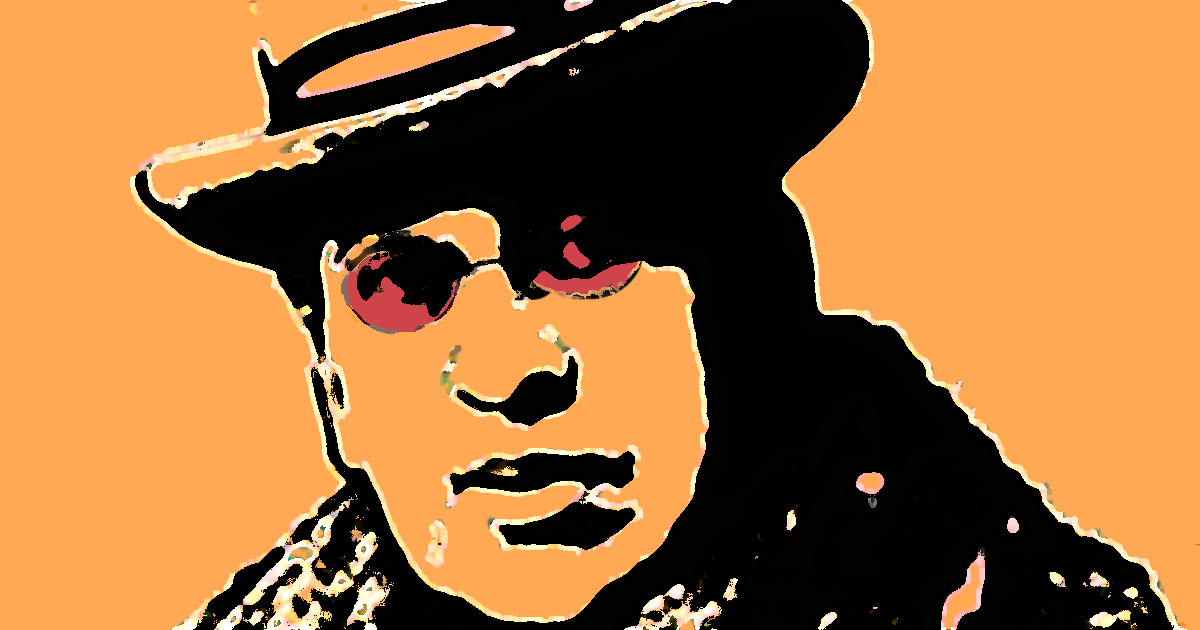
The immortal dandy of Dutch literature.
June 10 | The birthday of Louis Couperus (1863 – 1923), undoubtedly the most renowned Dutch writer of the fin de siècle. With his unparalleled psychological depth, aesthetic elegance, and razor-sharp social criticism, he brought nineteenth-century The Hague and the Dutch East Indies to life. Whether it concerns melancholic novels set in The Hague, historical tales, or poignant literature about the Indies; the work of Louis Couperus remains alive and relevant to this day.
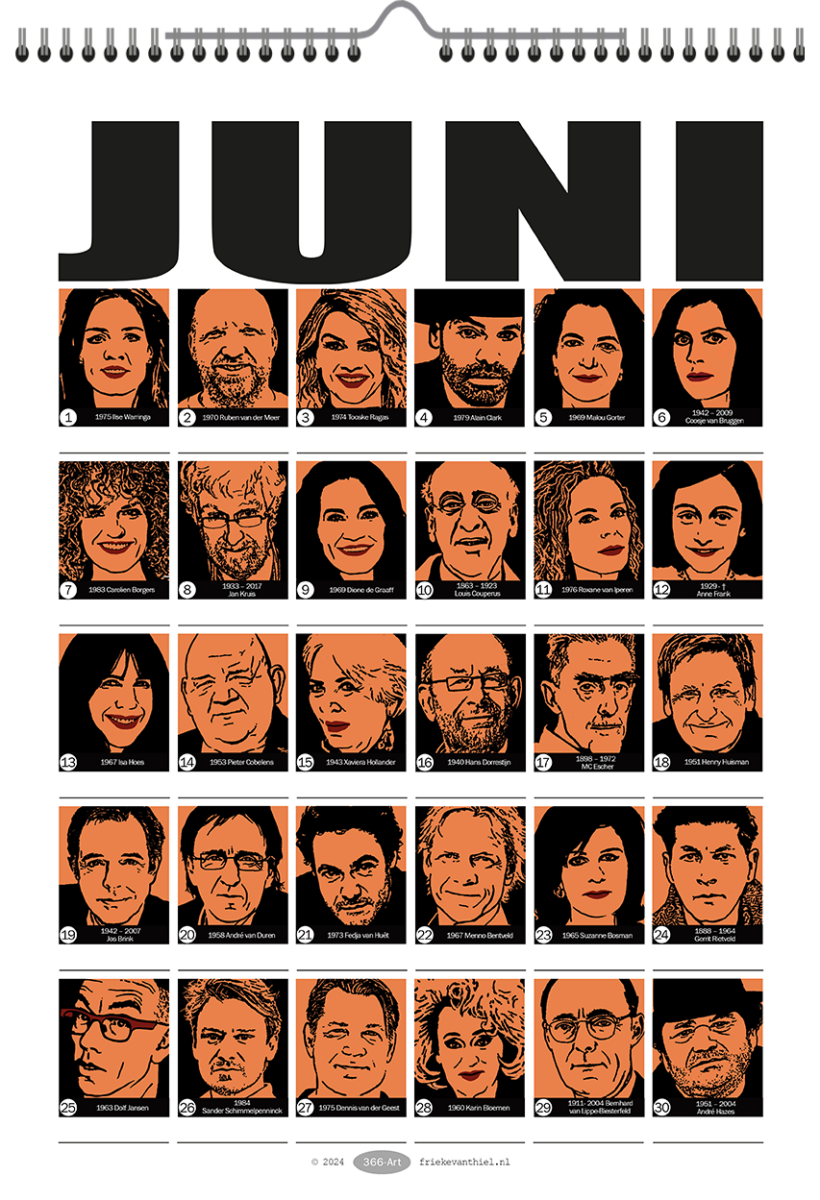
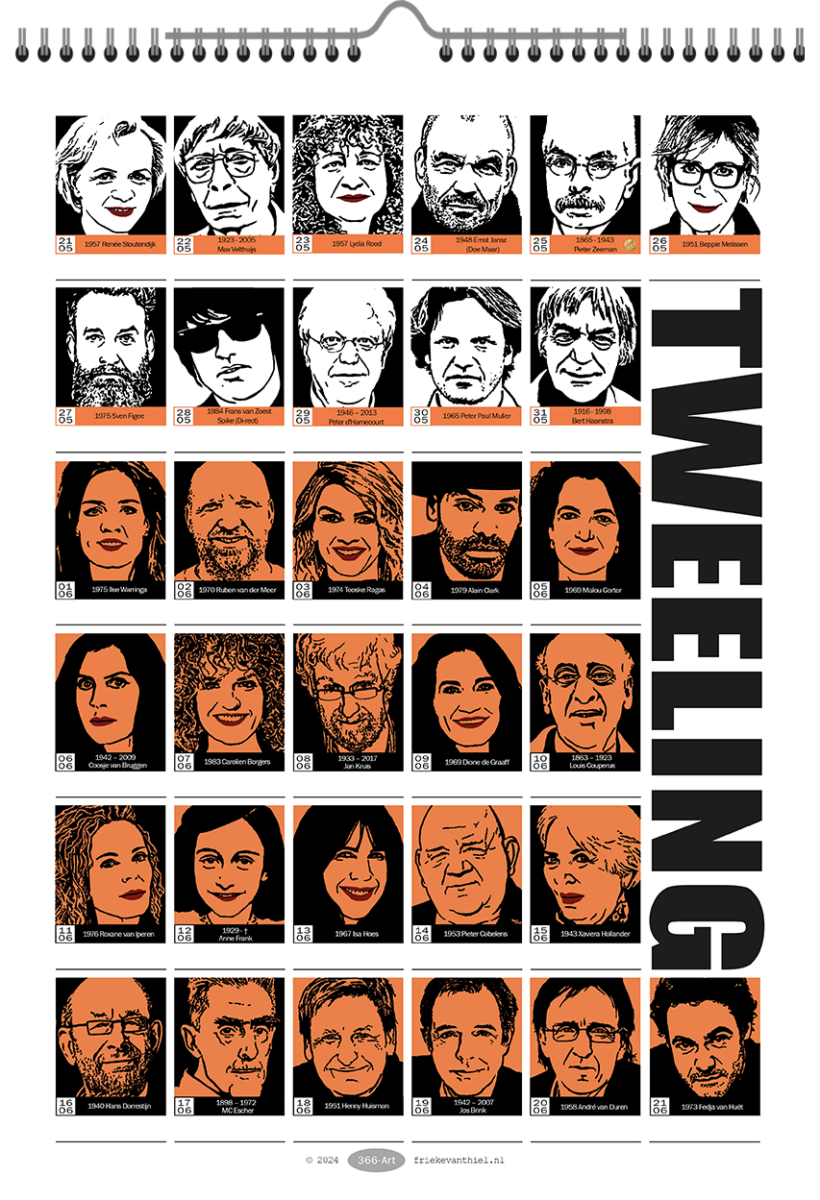
Further down in this blog is his biography. The digital edit of his portrait and the birthday calendars with 366
Special Dutch people are, made by me, Frieke van Thiel
Biography: A cosmopolitan life
Louis Marie Anne Couperus was born on June 10, 1863, in The Hague, the youngest child of a wealthy Hague regent family. His father, John Ricus Couperus, was a judge in Batavia (present-day Jakarta), causing Louis to spend part of his early childhood in the Dutch East Indies. These colonial experiences would later play a prominent and indelible role in his writing.
After his return to the Netherlands, he studied at the Eerste Hogere Burgerschool in The Hague. He showed literary ambitions from a young age. Although he began with poetry, his true strength lay in prose. In 1889, he made a masterful debut with the novel Eline Vere, which initially appeared in installments in the Hague daily newspaper The Fatherland appeared and immediately brought him national fame.
In 1891, Couperus married his cousin Elisabeth (Betty) Baud. The couple led a travel-filled, cosmopolitan life and lived in various places in Europe, including Italy, France, England, and Germany. Couperus was bisexual—an open secret that he subtly and aesthetically wove into his correspondence and work. His international lifestyle and broad cultural interests constantly nourished his writing.
On July 16, 1923, Louis Couperus died in De Steeg near Rheden, shortly after his sixtieth birthday. He left behind an impressive oeuvre of more than forty novels, in addition to plays, travel stories, essays, and poems.
Literary style and themes
Couperus is generally classified as belonging to Naturalism and Symbolism, but his work transcends both movements. His style is characterized by long, flowing sentences, rich imagery, and deep psychological insight into his characters. Central to his oeuvre are themes such as:
· Fate and determinism: Man as a plaything of forces (the fate) which he cannot control.
· Decline of the aristocracy: The downfall and ostentation of the old Hague regent families.
· Colonialism and Orientalism: The complex, mystical relationship between the Netherlands and its colonies.
· Sexuality and gender: Often interwoven in concealing, decadent, or allegorical forms.
His prose has a musical quality that has captivated readers and critics for more than a century. The writer himself described his style as “deliberate and refined” — he polished every sentence as if it were a precious composition.
The most important works of Louis Couperus
Eline Vere (1889)
This is the masterful debut that made Couperus famous overnight. Eline Vere It describes the life of the sensitive, nervous Eline in the stifling Hague society of the late nineteenth century. The book is considered a milestone of Dutch naturalism and is internationally compared to the masterpieces of Flaubert and Zola.
Fate (1890)
Fate is a poignant, psychological novel about three friends whose lives become inextricably and destructively intertwined. The theme of inevitable fate is fully developed here for the first time. The novel attracted international attention; the English translation (Footsteps of Fate) was praised at the time by Oscar Wilde, among others.
The Silent Force (1900)
The silent force It is set on colonial Java and thematizes the mysterious, elusive spiritual resistance of Indies culture against the European occupier. The book is regarded worldwide as an absolute highlight in the history of postcolonial literature.
The Books of Little Souls (1901–1903)
The impressive novel cycle The books of little souls It consists of four parts and is considered Couperus' most ambitious Dutch project. It offers the reader a broad, melancholic panorama of The Hague's affluent bourgeoisie and the inevitable decline of a great family lineage.
The Mountain of Light (1905–1906)
In The mountain of light Couperus turns resolutely towards classical antiquity. The novel recounts the decadent life of the young Roman emperor Heliogabalus. The book was extremely controversial at the time due to its explicit treatment of sexuality and gender, but is now regarded as an aesthetic masterpiece.
Antique tourism and travel stories
In addition to novels, Couperus wrote countless travel essays about his stay around the Mediterranean, collected in works such as With Louis Couperus in Africa and India. His travel prose combines historical erudition with lyrical, sensory descriptions.
Legacy, influence and commemoration
Louis Couperus's influence on Dutch literature is monumental. He broke with the prevailing tradition of sober, Calvinist realism and elevated Dutch prose to an international stylistic top level. Great authors such as Gerard Reve, Willem Frederik Hermans, and Hella Haasse acknowledged his influence on their own work.
His novels and stories have now been translated into more than twenty languages. The literary legacy is meticulously kept alive by the Louis Couperus Society, which regularly organizes lectures, publications, and cultural activities. In the field of postcolonial literary studies, it remains The silent force one of the most researched works in the world. In 2023, the centenary of the author's death was still celebrated on a large scale with national reading campaigns, theatrical adaptations, and deluxe reissues.
Digital resources and further reading
For those who wish to delve deeper into the world of this literary dandy, the following sources are indispensable:
· Completely digital oeuvre by Couperus on DBNL
· Official website of the Louis Couperus Society
· Literatuurgeschiedenis.nl – Context and analysis of Louis Couperus
Gift idea
You can order the digital edit of the portrait of Louis Couperus from me as a print: poster, canvas, or dibond. Choose a size and optionally a color that suits your interior — a beautiful gift for an art and culture lover, or for yourself (that is allowed too).
From €35. Send me a message via [contact] and we will make something beautiful out of it. Upon request, I will create a mockup so you can see how it looks on your wall.