

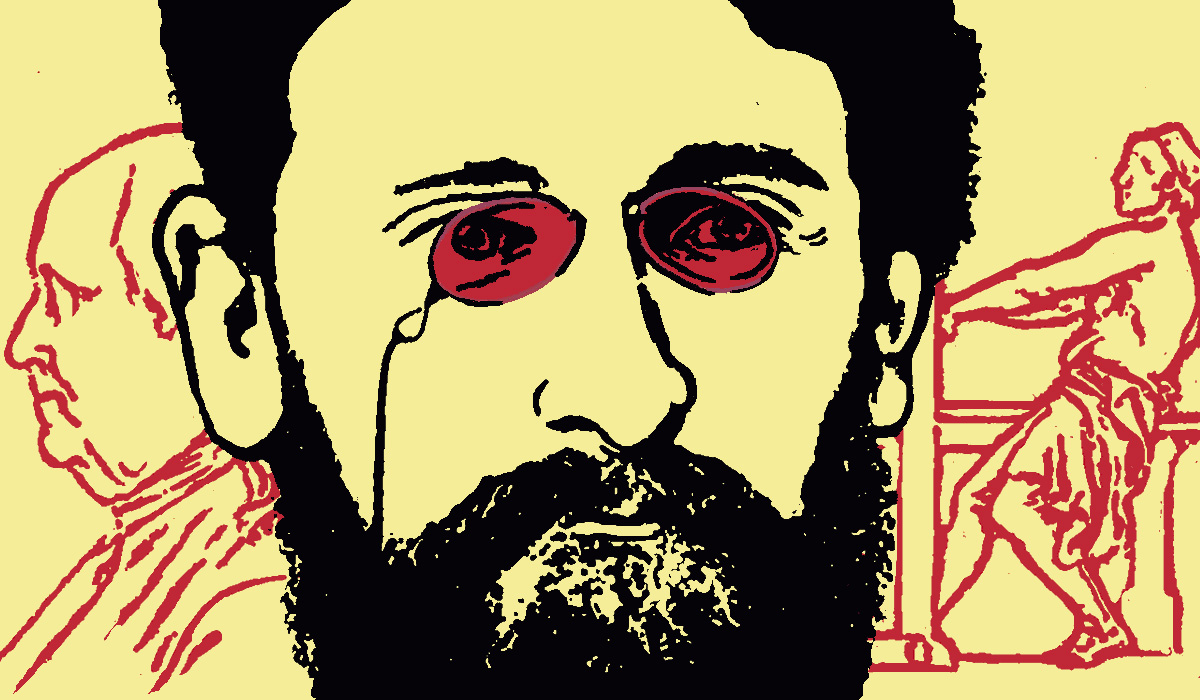
APRIL 10 | CELEBRATING JOSEPH PULITZER: THE FATHER OF MODERN JOURNALISM
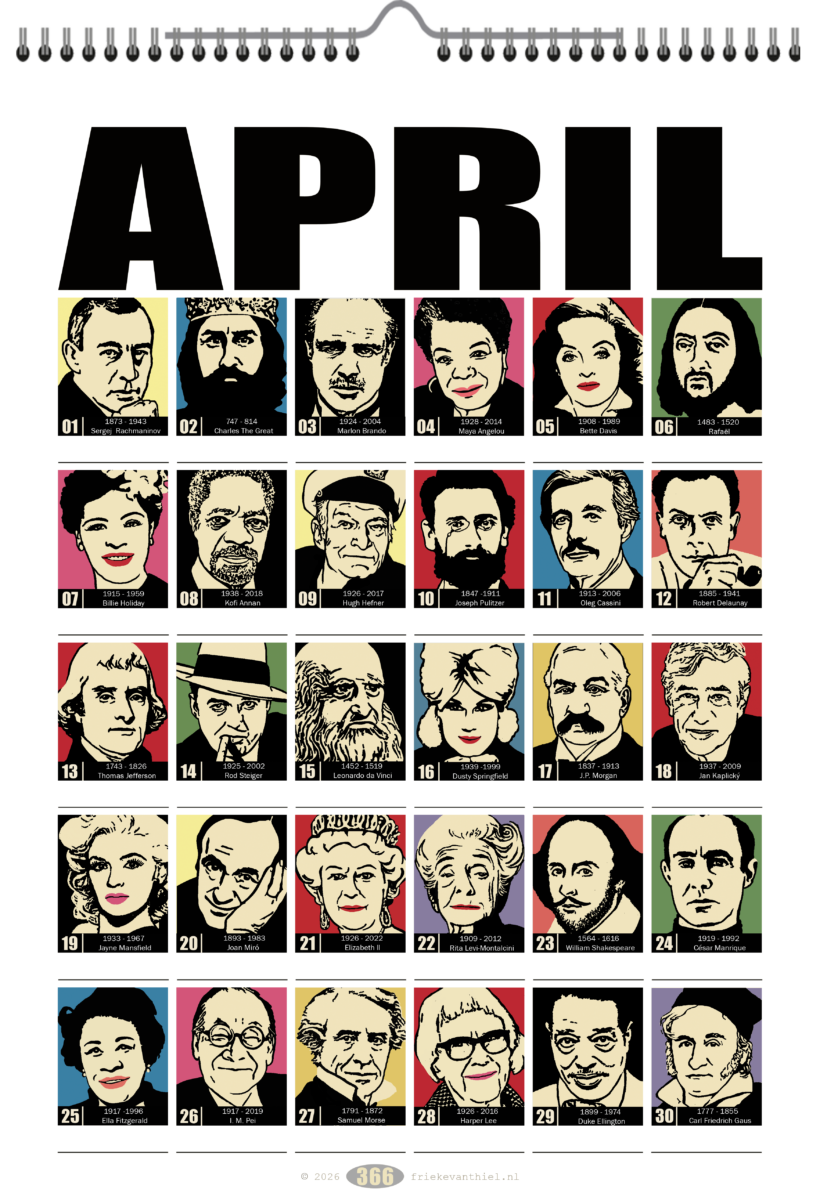
The digital rendition of the Joseph Pulitzer portrait above, and the birthday calendar featuring
366 legendary figures, were created by me, Frieke van Thiel.
Click April to see all the legendary personalities in this calendar.
Joseph Pulitzer: The Press Giant Behind the Pulitzer Prize
Joseph Pulitzer (1847–1911) is one of the most influential figures in the history of journalism. As an immigrant, newspaper tycoon, and fierce advocate for press freedom, he changed the face of American media forever. His legacy lives on through the renowned Pulitzer Prize, awarded annually to the world's finest journalists, writers, and musicians.
"The newspaper is the most powerful force for civilization that man has ever produced."
Early Life and Immigration (1847–1864)
Joseph Pulitzer was born on April 10, 1847, in Makó, Hungary. Raised in a multilingual household, he was fluent in Hungarian, German, and French. Following the death of his father, the family faced financial hardship. Due to his frail health and poor eyesight, he was rejected by the Austrian army, leading him to look toward America: the land of infinite opportunity. In 1864, he emigrated to the United States to serve in the American Civil War.
From Soldier to Journalist (1865–1878)
After the war, Pulitzer worked a variety of jobs, ranging from mule driver to professional chess player. He eventually settled in St. Louis, where his linguistic skills landed him a job at the Westliche Post, a German-language newspaper. His talent was undeniable: he was curious, tenacious, and had a keen sense of what captivated readers. In 1878, he purchased the St. Louis Dispatch and merged it into the St. Louis Post-Dispatch, a paper that relentlessly exposed corruption and the abuse of power. Westliche Post, een Duitssprekende krant. Zijn talent viel op: hij was nieuwsgierig, vasthoudend en had een scherp gevoel voor wat lezers boeide. In 1878 kocht hij de St. Louis Dispatch en fuseerde deze tot de St. Louis Post-Dispatch, een krant die corruptie en machtsmisbruik genadeloos aan de kaak stelde.
The New York World (1883–1900)
In 1883, Pulitzer purchased the New York World. He rewrote the rules of the profession by filling the paper with sensational yet well-researched stories, political cartoons, and clear language accessible to the common man. One of his greatest triumphs was the fundraising campaign for the pedestal of the Statue of Liberty. Thanks to Pulitzer's campaign, 120,000 ordinary citizens donated enough money to place the statue on its pedestal.
Yellow Journalism and the Rivalry with Hearst
Around 1898, Pulitzer became embroiled in a fierce battle with rival William Randolph Hearst. This era of "yellow journalism" was characterized by sensationalist reporting. Although Pulitzer later distanced himself from this style, he remained a believer in vibrant journalism, provided it was grounded in facts and served the public interest.
The Pulitzer Prize and Legacy
Despite becoming severely visually impaired by his forties, Pulitzer continued to lead his media empire with an iron fist from his yacht, the Liberty. Upon his death in 1911, he left a fortune to establish the Columbia University Graduate School of Journalism and the creation of the Pulitzer Prizes.
The Pulitzer Prize was first awarded in 1917 and is now considered the most prestigious journalistic honor in the world. It symbolizes Pulitzer's vision: the press as the watchdog of democracy and the indispensable link between the citizen and the state.
Did you know? The secret of the Pulitzer Medal
The famous gold medal features a portrait of Benjamin Franklin, symbolizing a free press. The reverse side depicts a printer at an early printing press. Interestingly, only winners in the "Public Service" category actually receive this medal; other winners receive a certificate and a monetary award.
Click April to view the full calendar and discover all 366 legendary icons!